What kinds of mountains does China have?
Five kinds: sandstone pillar forests (Zhangjiajie); granite peaks (Huangshan, Hua Shan); karst hills (Guilin and Yangshuo); sacred and historic mountains (Tai Shan, Emei, Wudang, Lushan); and the snow mountains of the high plateau (Jade Dragon, Meili, Yading, Everest). The kind decides what you see, how hard you walk and when to go.
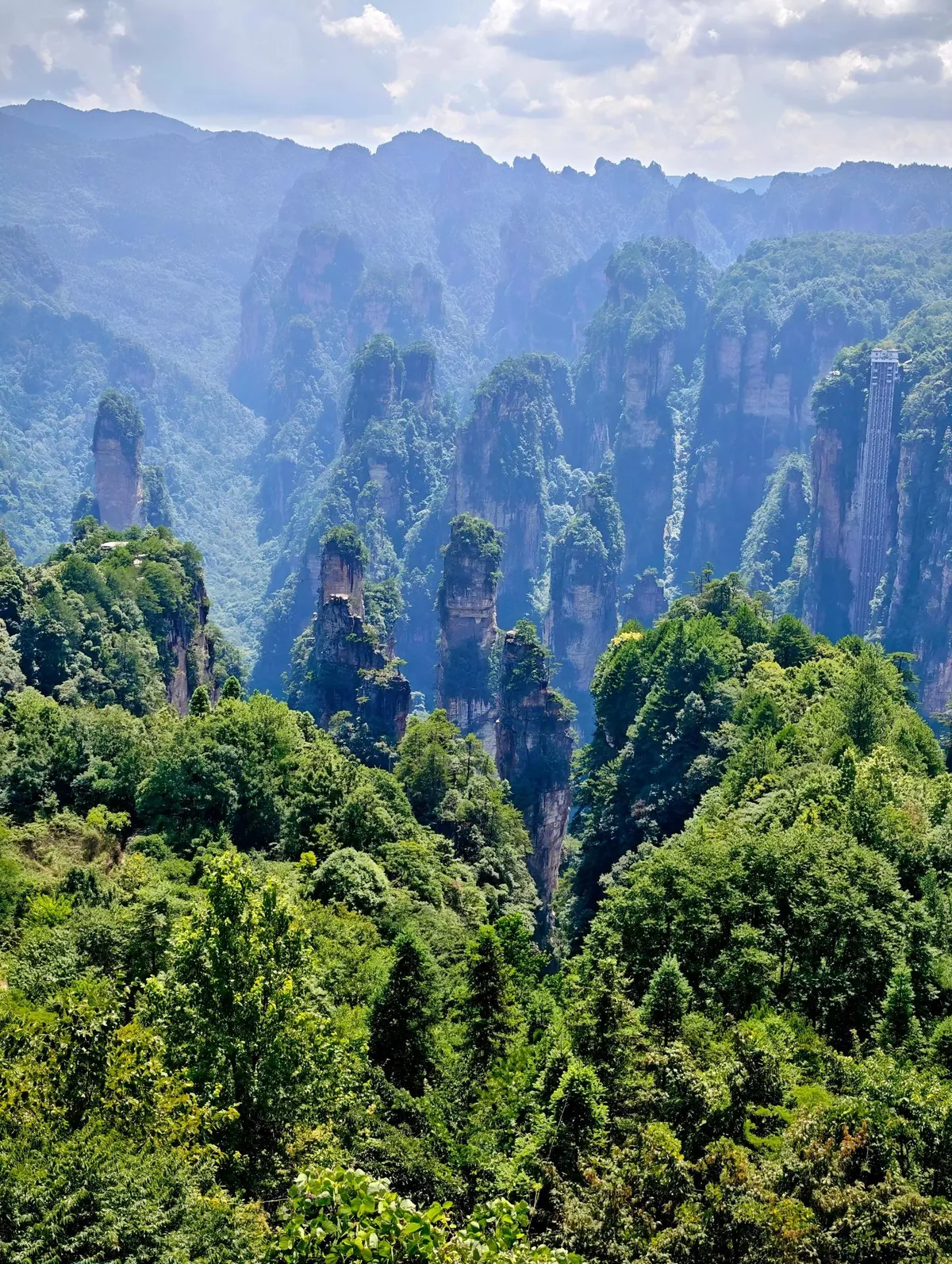
- Sandstone pillars. Quartz sandstone cut into more than 3,000 thin columns, many over 200 m, seen from cliff-top walkways. Wulingyuan is the one quartz-sandstone pillar forest on the World Heritage list.
- Granite peaks. Granite weathered into rounded or sharp summits, with pines and seas of cloud: Huangshan is the painted one, Hua Shan the sheer one with cliff-edge walkways.
- Karst. Limestone dissolved into cone-shaped hills among rivers and fields, seen from a boat or a bicycle; Guilin and Yangshuo are the fenglin and fengcong examples of the South China Karst.
- Sacred and historic mountains. Walked for a thousand years or more: imperial ritual on Tai Shan, China’s first Buddhist temple on Emei, Taoist Wudang, the academy and villas of Lushan. Steps and temples, for people who want history.
- Snow mountains and the high plateau. Yunnan, western Sichuan and Tibet: snow peaks, sunrise on the summits and high lakes, at the cost of altitude and long drives.
Sandstone pillars: Zhangjiajie and Tianmen Mountain
Both are in the hill country of western Hunan. Wulingyuan was listed by UNESCO in 1992 for its more than 3,000 quartz-sandstone pillars; Avatar’s floating mountains were modelled on Yuanjiajie, though the 2009 film was made in a studio. Allow at least three days: two for the forest park, one for Tianmen.
Zhangjiajie National Forest Park
China’s first national forest park, opened in 1982, and the core of the Wulingyuan World Heritage site: four cliff-top and valley areas (Yuanjiajie, Tianzi Mountain, Yangjiajie, Huangshizhai) and two valley-floor trails, joined by park buses, cableways and the 326 m Bailong Elevator. The railed, mostly level Yuanjiajie walkway takes one to three hours; its Qiankun Pillar, about 1,080 m above sea level, was officially renamed Hallelujah Mountain in January 2010. Official listed price about ¥165 for four consecutive days (checked November 2026), park bus ¥72 extra; foreign visitors aged 65 and over enter free. One day for the core, two for all of it. Suits photographers, light hikers and older parents: see the forest park page and the Avatar mountains page.
Tianmen Mountain
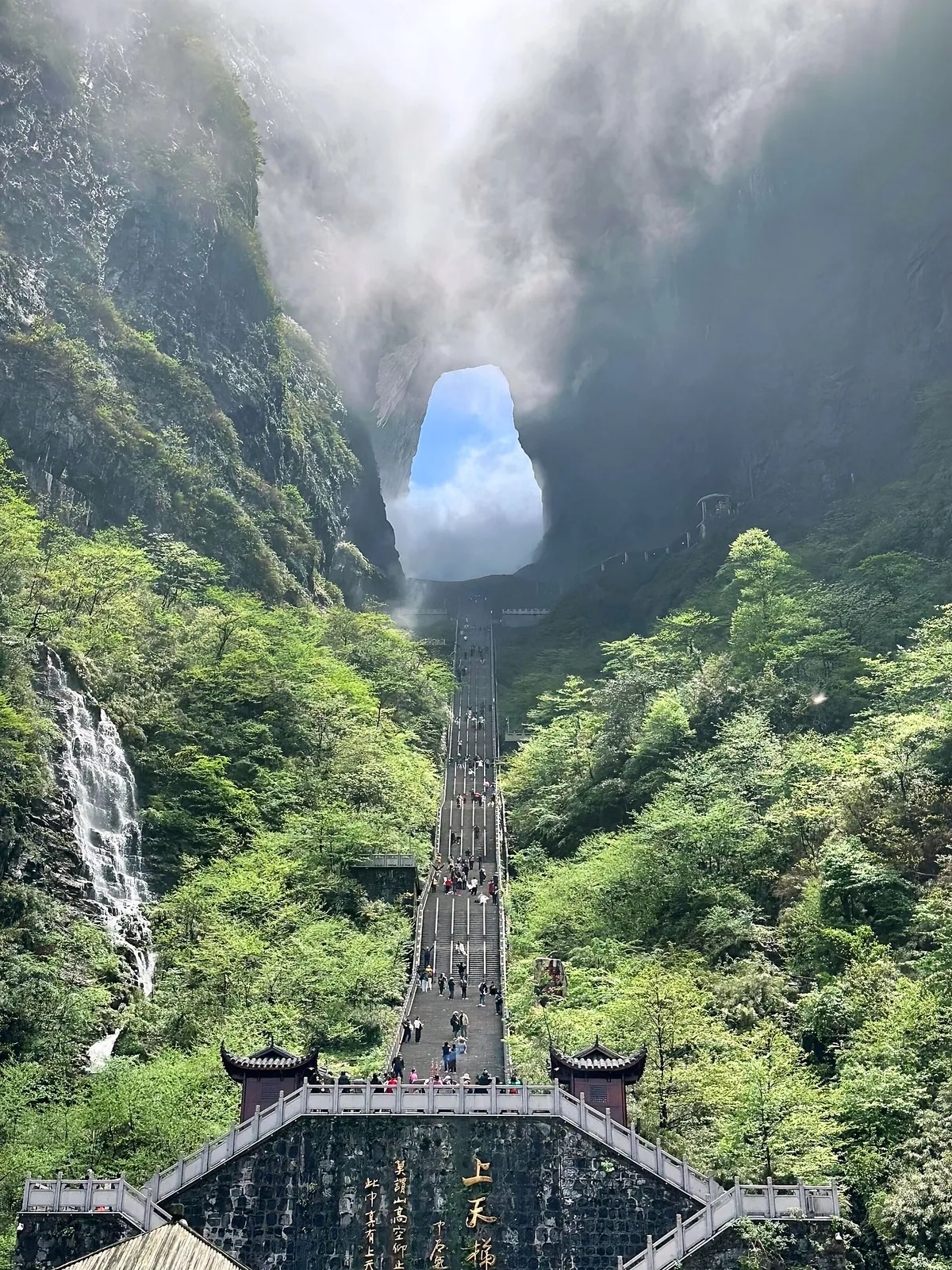
On the edge of Zhangjiajie city, the hole through the mountain visible from the streets. Tianmen Cave is 131.5 m high and 57 m wide; the summit has three glass walkways, the Coiling Dragon Cliff walk 100 m long. Since 13 October 2026 Route C is the one route that runs: gate → express cableway to the cave → seven escalators to the summit → back the same way; the 7.4 km cableway from the city and the 99-bend road are closed, with no reopening date announced. Allow 4–6 hours. Official listed price about ¥288 including insurance, ¥116 over 65, foreign passports accepted (checked November 2026). About 40 km from Wulingyuan. Anyone nervous of heights can see the cave and skip the walkways; details on the Tianmen Mountain page.
Getting there
Changsha to Zhangjiajie West by high-speed train takes about 1 h 45 at the fastest, 2–3.5 h for most of the 40-plus daily trains; Chongqing East from about 2 h 06; Shanghai and Beijing by air 2–3 h (checked November 2026). See the getting-there page, the weather page and the how-many-days page.
Granite peaks: Huangshan and Hua Shan
Huangshan, in Anhui, was listed by UNESCO in 1990: granite peaks, many over 1,000 m, Lotus Peak 1,864 m, with pines and seas of cloud, worth a night on the summit. Hua Shan, 120 km east of Xi’an with South Peak at 2,160 m, is cliff-edge steps and the plank walk in a day.
Huangshan
The mountain of Chinese landscape painting, named in 747; Lotus Peak, the highest, is 1,864 m. Shanghai to Huangshan North by high-speed train is about 2.5–3.5 h, then about 50 km by road to the scenic area (checked November 2026). Three cableways go up. Sunrise needs a night on the mountain; visitors report booking summit hotels about a month ahead, seas of cloud mainly from November to May, the pleasantest walking in spring and autumn, and the West Sea Canyon usually closed from December to April. Official listed price about ¥190 in the 2026 regular season, ¥150 in winter (checked November 2026); cableways ¥80–100 one way. Expect many steps above the cableway.
Hua Shan
In Weinan, Shaanxi, 120 km from Xi’an; high-speed trains reach Huashan North in about 28 minutes to 1 h 22 (checked November 2026). Five peaks of sheer granite, South Peak 2,160 m and North Peak 1,614 m, and two cableways: a line of about 1,500 m, 7–8 minutes, to the North Peak, and one of about 4,211 m, some 20 minutes, to the West Peak. The plank walk on South Peak is about 0.3 m wide; visitors report it limited to ages 15–55 and heights over 150 cm, in groups of 30. April to October is the season. A day from Xi’an, for the vertiginous photograph; not for older parents, as the steps are steep.
Karst: Guilin and Yangshuo
Guangxi. The Guilin karst joined the World Heritage list in 2014 as part of the South China Karst extension. You see it from the water: the Li River cruise from Guilin to Yangshuo takes about 4–5 hours, and Yangshuo is about 70 km from Guilin. April to November is the season.
Guilin and Yangshuo
Nobody climbs these hills; you look at them from the river and the fields. UNESCO lists the Guilin area as the fenglin and fengcong type. The cruise from Guilin to Yangshuo takes about 4–5 hours, depending on the water level; around Yangshuo people cycle between the hills and the paddies. Visitors report September to November the most comfortable, March to May the most painterly in mist but the wettest in May, and December to February grey and low in the river. Guangzhou to Guilin by high-speed train is about 2–5.5 h; Guilin to Zhangjiajie West has one direct train a day, about 7–7.5 h (checked November 2026). Suits older parents, children and anyone who wants no steps; two to three days.
Sacred and historic mountains: Tai Shan, Emei, Wudang and Lushan
Four mountains people have walked for centuries: Tai Shan’s 6,660 steps and three thousand years of imperial ritual; Emei’s thirty-odd temples and, an hour’s drive away at Leshan, the 71 m Giant Buddha; Wudang’s Ming-dynasty Taoist buildings; Lushan’s academy and 600 old villas. All are on high-speed lines, each one to two days.
Tai Shan
At Tai’an in Shandong, the eastern of the Five Great Mountains, listed by UNESCO in 1987, rising 1,545 m above the plain. The First Emperor made offerings here in 219 BCE; twelve imperial sacrifices followed, leaving about 1,800 inscribed stones and 22 temples. The east route from Red Gate climbs more than 6,000 steps, about four hours, visitors report; older parents take the bus from Tianwai Village to Zhongtianmen and the cableway on. Official listed price about ¥115 including the Dai Temple (checked November 2026); Beijing South to Tai’an by high-speed train is about 2–2.5 h (checked November 2026). Spring or autumn, avoiding Chinese national holidays; one to two days.
Emei Shan and the Leshan Giant Buddha
In Sichuan, listed by UNESCO in 1996. China’s first Buddhist temple was built on the summit in the 1st century, and more than thirty temples stand today; about an hour’s drive away in Leshan is the 71 m Giant Buddha, carved in the 8th century. The Golden Summit is just over 3,000 m, reached by cableway. Chengdu East is about an hour away by high-speed train (checked November 2026). Two days, with a night on the mountain; visitors report the steadiest weather in autumn, especially November. The Golden Summit has a daily cap on tickets, so book ahead in peak season. Wild monkeys on the middle trails; keep bags closed. Bus and cableway reach the summit, so older parents manage.
Wudang Shan
At Danjiangkou in Hubei, UNESCO cultural heritage since 1994 and the centre of Taoism: the Ming dynasty built nine palaces, nine monasteries and 72 temples, and 53 ancient buildings survive, among them bronze shrines, the oldest cast in 1307. Tianzhu Peak is about 1,600 m; the Qiongtai cableway runs to the Golden Summit. Wuhan to Wudangshan West by high-speed train is about 2.5–3.5 h, then about 12 km to the scenic area (checked November 2026); the scenic-area bus is compulsory. April–May and September–October are the months, with seas of cloud likeliest in autumn. For Taoism, martial arts or architecture; one to two days.
Lushan
At Jiujiang in Jiangxi, a UNESCO cultural landscape since 1996, between the Yangtze and Poyang Lake; Hanyang Peak is 1,474 m. White Deer Grotto Academy dates from 940, and the mountain has been a hill resort since the late 19th century, with some 600 villas. Guling, the town on top at about 1,200 m, has hotels and restaurants, so you sleep on the mountain and walk slowly. Jiujiang station is about 32 km from the park (checked November 2026). Season April to November. For anyone who finds a Chinese summer too hot or travels with older parents, since the town is level and reached by car; two days.
Snow mountains and the high plateau: Jade Dragon, Meili, Daocheng Yading and Everest
Two in Yunnan (Jade Dragon 5,596 m, Kawagebo 6,740 m), one area in Sichuan (Yading, Xiannairi 6,032 m) and one in Tibet (Everest, with a permit and an agency). They share altitude, sunrise and the risk of altitude sickness, so spend a night or two in the lower town — Lijiang, Shangri-La, Lhasa — before going higher.
Jade Dragon Snow Mountain
About 30 km from Lijiang old town, about an hour by road; the summit is 5,596 m. The big cableway rises to the Glacier Park at about 4,500 m, with steps higher still, so it is a day out from Lijiang. Oxygen and down jackets are hired on the mountain; visitors report the upper station unsuited to very young children and many older people. Visitors report the snow fullest from November to April, and June to October bringing less snow and more cloud, though the meadows and lakes still reward the trip. Half a day to a day, for a snow mountain in a single day.
Meili Snow Mountain (Kawagebo)
In Deqin, Yunnan, inside the Three Parallel Rivers World Heritage site; Kawagebo, the main peak, is 6,740 m. The peaks are not open to climbing; they are local sacred mountains with a pilgrimage circuit. People come for the sunrise, when the first light turns the snow gold; the season is late October to March, outside the rains. The viewpoints are around Feilai Temple, about 10 km from Deqin and about 190 km, 4–5 hours by road, from Shangri-La (checked November 2026). Two to three days with a night at Feilai Temple, for photographers who accept long drives.
Daocheng Yading
In Ganzi, Sichuan, between about 2,900 and 6,032 m. Three snow peaks ring the high lakes: Xiannairi, 6,032 m, is the highest, the other two 5,958 m each; they are not open to climbing, and are local sacred mountains with a pilgrimage circuit. Chengdu to Daocheng Yading airport, at 4,411 m, is about an hour by air, then about 130 km by road (checked November 2026). Visitors report April–May and October–November as the months. Three to four days, acclimatising lower down first; for hikers and photographers of high lakes, not for older parents or small children, since the core lakes are at altitude.
Everest Base Camp (Tibet side)
Foreigners need a Tibet Travel Permit arranged by a licensed agency and travel with that agency; the Everest section is a multi-day add-on from Lhasa.
Which mountain is right for you?
For quartz-sandstone pillars, Zhangjiajie. For pines and seas of cloud, Huangshan; for a head for heights, Hua Shan; for no climbing at all, Guilin. For history and steps, Tai Shan, Emei or Wudang; for a cool summer, Lushan. For snow: Jade Dragon in a day, Meili or Yading in three, Everest with an agency.
| Mountain | Kind | Province | Nearest city and the way in | Days people usually give it | Months | Suits |
|---|---|---|---|---|---|---|
| Zhangjiajie (Wulingyuan) | Sandstone pillars | Hunan | Changsha, train from about 1 h 45 | 3 (with Tianmen) | spring and autumn; cloud sea after rain | photographs, light hiking, older parents |
| Tianmen Mountain | Cave and glass walkways | Hunan | Zhangjiajie city | half a day to a day (4–6 h) | as above; open in rain and mist | glass walkways, the cave |
| Huangshan | Granite | Anhui | Shanghai, train about 2.5–3.5 h, then about 1 h by road | 2, with a night up | late March–May, September–mid-November | photographs, slow walking |
| Hua Shan | Granite, sheer | Shaanxi | Xi’an, train from about 28 min | 1 | April–October | the vertiginous day |
| Guilin and Yangshuo | Karst | Guangxi | Guangzhou, train from about 2 h 04 | 2–3 | April–November | older parents, children, no climbing |
| Tai Shan | Sacred (Five Great Mountains) | Shandong | Beijing, train about 2–2.5 h | 1–2 | spring and autumn | history, steps, sunrise |
| Emei Shan and Leshan | Buddhist mountain | Sichuan | Chengdu, train about 1 h | 1–2 | autumn, especially November | pilgrimage, the Buddha, older parents |
| Wudang Shan | Taoist mountain | Hubei | Wuhan, train about 2.5–3.5 h | 1–2 | April–May, September–October | Taoism, tai chi, architecture |
| Lushan | Cultural landscape, hill resort | Jiangxi | Jiujiang station, about 32 km | 2 | April–November; cool summers | older parents, staying up the mountain |
| Jade Dragon Snow Mountain | Snow mountain | Yunnan | Lijiang, about 30 km | 1 | November–April for snow | a snow mountain in a day |
| Meili Snow Mountain | Snow mountain, sacred | Yunnan | Shangri-La, about 190 km, 4–5 h | 2–3 | late October–March | sunrise on snow, photographs |
| Daocheng Yading | High-plateau snow peaks | Sichuan | Chengdu, about 1 h by air, then about 130 km | 3–4 | April–May, October–November | hiking, high lakes |
| Everest Base Camp (Tibet) | High plateau | Tibet | from Lhasa, with a licensed agency | several days, with the group | set by the agency | permit holders who accept altitude |
Two ways to link mountains in one trip
Two sample routes. East: Shanghai → Huangshan → Zhangjiajie, 8–9 days, putting rounded granite with pines beside thin sandstone with mist. North: Beijing → Tai Shan → Xi’an → Hua Shan, 6–7 days, a sacred mountain and a sheer one in a week. The Zhangjiajie section follows the three-day plan.
Route 1: Shanghai → Huangshan → Zhangjiajie (8–9 days)
- Day 1 — Shanghai.
- Day 2 — train to Huangshan North, about 2.5–3.5 h; a night at the foot of the mountain.
- Day 3 — cableway up; a night on the mountain.
- Day 4 — sunrise, walk down, back to Huangshan city.
- Day 5 — to Zhangjiajie via Changsha by rail, or fly from Shanghai (2–3 h).
- Days 6–7 — the forest park.
- Day 8 — Tianmen Mountain.
- Day 9 — leave.
Why this order: rounded granite with pines beside thin sandstone with mist, and the contrast is sharpest in one trip.
Route 2: Beijing → Tai Shan → Xi’an → Hua Shan (6–7 days)
- Day 1 — Beijing.
- Day 2 — Beijing South to Tai’an, about 2–2.5 h; the Dai Temple in the afternoon.
- Day 3 — Tai Shan by cableway or on foot (about four hours, visitors report); overnight train or next-morning train to Xi’an.
- Day 4 — Xi’an.
- Day 5 — Hua Shan for the day, from about 28 minutes by train.
- Day 6 — Xi’an.
- Day 7 (optional) — fly to Zhangjiajie, about 1.5 h, and add the three-day plan.
Why this order: both are reached from a high-speed station in a day, one steps and inscribed stones, the other cliff-edge walkways.
Prices, opening arrangements and journey times on this page were checked in November 2026. All of them change by season and by year; treat them as a guide, not a quote.
Quick answers
Which mountain is the one in Avatar?
The sandstone pillars of Yuanjiajie, in Zhangjiajie National Forest Park, were the model for the floating mountains. The 2009 film was made in a studio; nothing was shot in Zhangjiajie.
Which of these mountains are UNESCO World Heritage sites?
Tai Shan (1987), Huangshan (1990), Wulingyuan (1992), Wudang (1994), Emei and Leshan (1996), Lushan (1996), the Three Parallel Rivers that include Meili (2003) and the Guilin karst (2014). Hua Shan, Jade Dragon and Yading are not listed.
Which mountain is easiest with elderly parents?
Guilin, where you sit in a boat and climb nothing; Zhangjiajie, where the cliff-top walkways are level, there is a lift, and foreign visitors aged 65 and over enter the forest park free; and Lushan, where you stay in the town on top. Not the snow mountains.
Do I need a permit for any of these?
Tibet alone, Everest included: a Tibet Travel Permit arranged by a licensed agency, and you travel with that agency. Everywhere else a passport buys the ticket.
Is there one season that suits all of them?
No. Huangshan, Wudang and Hua Shan are spring and autumn; Meili and Jade Dragon run from October or November to March or April; Yading is April–May and October–November; Zhangjiajie is clearest the day after rain.